.svg)
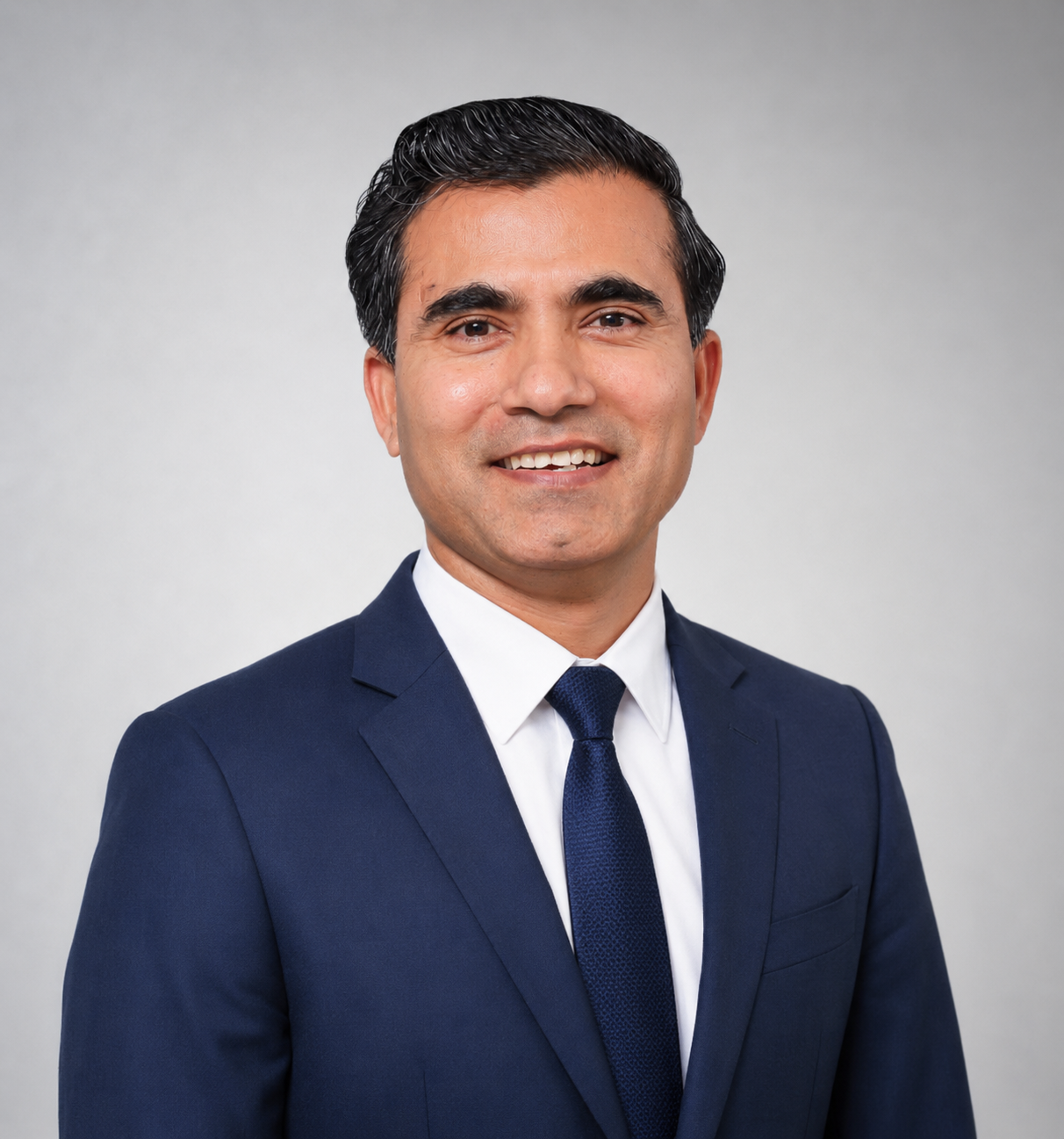
Featured Scientist: Prof Khajamohiddin Syed
Turning biological information into biological understanding
For Prof Khajamohiddin Syed, science is about understanding how biological systems work and using that knowledge to address real-world challenges.
Syed is a Professor of Biochemistry in the Department of Biochemistry and Microbiology at the University of Zululand (UNIZULU). His research brings together biochemistry, bioinformatics, structural biology, evolutionary biology and drug discovery, with a strong focus on understanding proteins through their sequences, structures, functions and evolutionary histories.
His academic journey began in Andhra Pradesh, India, where he completed a BSc in Biological Sciences at Sri Krishnadevaraya University, followed by an MSc in Biochemistry. He graduated first in his class and received a gold medal in 2000. In 2006, he completed his PhD in Biochemistry, investigating a gene associated with organophosphorus pesticide degradation in Flavobacterium.
After his PhD, Syed moved to South Africa and worked as a postdoctoral research associate at the University of the Free State. He later spent time as a visiting scholar at the University of Cincinnati in the United States before joining the Central University of Technology, where he progressed from lecturer to associate professor. He later joined UNIZULU, becoming a Professor in 2022. He is also an NRF C1-rated researcher for the 2024–2029 period.
A major focus of his research is cytochrome P450 monooxygenases, commonly known as P450s. Syed describes these enzymes as biological “chemical machines” or molecular chemists operating inside cells. They help organisms chemically modify a wide range of molecules and are involved in processes such as medicine metabolism, hormone modification, detoxification and the production of natural compounds.
Using genome-scale and computational approaches, his group investigates how P450s are distributed across organisms, what functions they perform and how they have evolved. This work has contributed to several important discoveries, including the identification of a novel P450 fusion protein in oomycetes and research showing how an organism’s ecological lifestyle may influence the diversity of its P450 enzymes.
One of the projects Syed is particularly proud of is the P450Atlas, developed with Prof David Nelson from the University of Tennessee and Prof Dominik Gront from the University of Warsaw. The resource allows researchers to explore P450 families and subfamilies and supports automated sequence classification. The work was published in Protein Science in 2025. His collaborative research has also contributed to the discovery of three novel classes of glutathione transferases in Cryptosporidium.
Beyond scientific discoveries, Syed places strong emphasis on mentorship and research development.
“Research is not only about publications and discoveries; it is about developing researchers.”
He has supervised students across honours, master’s and doctoral programmes and sees developing future scientists as an important part of his contribution to research.
Looking ahead, Syed wants his work to help bridge the gap between the rapidly growing amount of genomic information available and scientists’ ability to understand what genes and proteins actually do. He sees computational biology and artificial intelligence as powerful tools for addressing this challenge, provided they remain supported by strong biological understanding and experimental validation.
He is also committed to strengthening African computational biology and bioinformatics capacity, through improved training, infrastructure, collaboration and scientific visibility.
Ultimately, his research goal is clear: to transform biological information into biological understanding, and that understanding into useful solutions for health, biotechnology and society.