.svg)
El Niño can lead to Day Zero scenarios
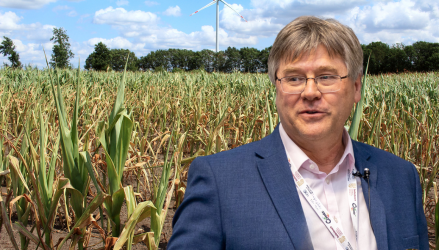
NITheCS Associate Prof Guy Midgley, Director of the School for Climate Studies at Stellenbosch University, was recently featured in the Pretoria Far East Rekord, where he shared his insights on the potential impacts of developing El Niño conditions on South Africa.
In the article (below), Prof Midgley discusses the likelihood of warmer and drier weather, the importance of water security and resilient infrastructure, and the need for proactive planning to help reduce the risks to agriculture, municipalities and communities should El Niño develop later this year.
'South Africans may need to prepare for warmer and drier conditions in the coming months as scientists grow increasingly confident that El Niño conditions are developing in the Pacific Ocean.
Climate phases
El Niño and La Niña are opposite climate phases affecting South African weather. During El Niño, warm Pacific waters disrupt wind patterns, severely suppressing South Africa's vital summer rainfall. This triggers intense heatwaves, severe agricultural droughts, and major crop failures across the interior provinces.
Conversely, La Niña cools the Pacific, strengthening easterly winds that dump heavy rainfall over the country. While this replenishes dams, it often causes destructive flash flooding in north-eastern regions, while paradoxically increasing wildfire risks in the Western Cape.
According to Professor Guy Midgley, director for the School for Climate Studies of Stellenbosch University, confidence among many scientists that El Niño will emerge by the end of the year is extremely high, with some estimates placing the probability above 90%.
He explained scientists are closely monitoring sea surface temperatures in the central and eastern tropical Pacific Ocean west of the Americas. These temperatures are among the most important indicators used to determine whether the weather phenomenon's conditions are strengthening.
Midgley pointed out while development of abnormally high sea surface temperatures, predicting exactly how it will affect South Africa remains more difficult.
El Niño
Historically, El Niño has often been linked to warmer and drier conditions across southern and eastern Africa. However, Midgley cautioned that the relationship is not always straightforward.
“Overall, these conditions bring warmer and drier conditions to southern and eastern Africa, but the predictive power is not much better than about 60% confidence with more than a few months lead time,” he said.
South Africa's summer rainfall provinces, including Gauteng, Limpopo, Mpumalanga, and the Free State, are likely to be watched closely should the high sea surface temperatures strengthen. These regions depend heavily on seasonal rainfall to support agriculture, water supplies and economic activity.
Past events
Past events demonstrate that outcomes can vary considerably.
Midgley pointed to the severe drought associated with the 2014/15 El Niño, while noting that another very strong event in 1998 did not produce similar drought conditions in the region.
“No two El Niños are the same,” he said. Should it develop as expected, South Africa could experience above-average temperatures during spring and summer. However, Midgley noted that confidence remains limited regarding the extent of these impacts.
One area attracting particular attention is water security. Reduced rainfall can place pressure on dams, rivers and municipal water supplies, especially in regions already vulnerable to drought.
Improved situation
Midgley said the situation is somewhat improved by the relatively good rainfall experienced in recent years.
“Drought conditions reduce water security, but this depends on how long the high sea surface temperatures stays in place in the Pacific.
“After good rains in the past few years, it will take quite a severe drought to have a major effect over the next two years,” he said.
He pointed out water management authorities, agricultural businesses and food supply chains may all need to prepare for changing conditions.
Midgley said planning should begin well before any drought develops.
“Prepare for lower agricultural production of grain crops initially, possible increases in some food prices, closely monitor water use by all users as the abnormally high sea surface temperatures develops and adjust demand as much as possible to extend supply,” he said.
Relationship between climate change and Pacific warming
Scientists are also examining the relationship between climate change and Pacific warming. Although research continues, Midgley said uncertainty remains regarding whether climate change is making Pacific warming events stronger or altering their impacts.
Global ocean temperatures have increased significantly in recent decades, changing weather patterns around the world.
However, Midgley said it remains unclear how these warmer oceans are influencing the phenomenon.
He explained lessons from previous droughts have highlighted weaknesses in South Africa's preparedness and infrastructure.
Lessons learned
Midgley noted that some lessons learned during Cape Town's drought crisis were not fully applied elsewhere. “The lessons learned by Cape Town were not really even taken up by the Eastern Cape as they went into long-term drought after Cape Town did,” he said.
He added that inadequate maintenance of water infrastructure remains one of the greatest vulnerabilities during periods of drought.
“One of the main lessons we have learned is that if water infrastructure is not maintained, it is highly vulnerable to drought conditions and can lead to significant hardship,” he said.
As the abnormally high sea surface temperatures develops, South Africans may also face a heightened risk of extreme weather conditions.
Midgley identified heatwaves and veld fires as among the most significant threats associated with warmer and drier conditions. For metros such as Tshwane, municipalities, businesses, farmers and households, his message is to begin preparing early.
Response options
“Learning as much about the response options as they can, fast, and starting to budget for these to be rolled out,” he said.
While uncertainty remains about the exact strength of the developing complex weather patterns resulting from variations in ocean temperatures and its eventual impacts, experts agree that preparation and planning will be essential if South Africa is to minimise potential disruptions to water supplies, especially in metros and municipalities, agriculture and economic activity in the months ahead.'
This article was written by Elize Parker and originally published in the Pretoria Far East Rekord on 26 June 2026.