.svg)
Collaboration to strengthen honey bee forage resources
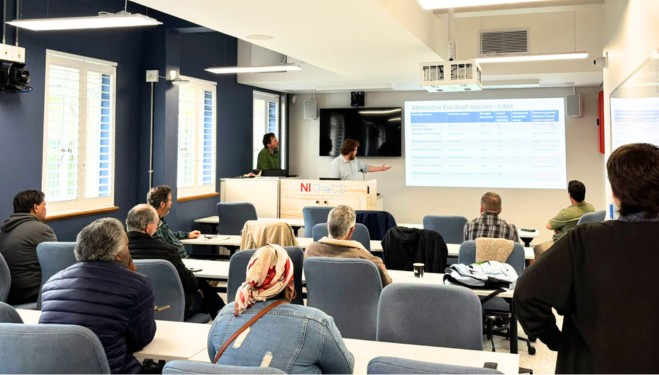
Beekeepers and bee forage stakeholders gathered at the NITheCS Seminar Room at Stellenbosch University on 29 August 2026 for an information session and workshop focused on strengthening forage resources for the managed honey bee industry in the Western Cape.
Hosted by the Western Cape Honey Bee Forage Committee (WCBFC), the event provided a platform for participants to explore both short- and long-term approaches to creating sustainable sources of forage. The availability of suitable forage remains one of the most significant constraints facing the bee industry, with implications for honey bee health, beekeeping operations, crop pollination and the broader agricultural sector.
The programme began with an information session outlining the history, current activities and priorities of the WCBFC. Participants were introduced to the Committee’s task teams, which focus on cover crops for the deciduous fruit and wine industries, natural forage and eucalyptus.
Practical ways to improve forage
The remainder of the day was dedicated to facilitated discussions on practical ways to improve honey bee forage in the province. Beekeepers and other stakeholders were invited to contribute proposals addressing matters such as suitable planting areas, access to land, implementation requirements, the organisations and individuals who would need to be involved, and the anticipated costs.
The workshop also provided an opportunity to discuss a WCBFC proposal aimed at promoting forage planting throughout the Western Cape. By drawing on participants’ practical experience and knowledge of local conditions, the session sought to identify workable approaches that could be implemented at ground level.
Chaired by Prof Ruan Veldtman, NITheCS Associate and Chair of the Western Cape Honey Bee Forage Committee, the event encouraged collaboration among beekeepers, researchers, landowners, agricultural stakeholders and other interested parties. It highlighted the importance of coordinated action in securing the forage resources needed to support a resilient and sustainable honey bee industry in the Western Cape.