.svg)
The European Union Emissions Trading Scheme (EU ETS): Design, Analysis & Trading
Video
Presenters

Poster
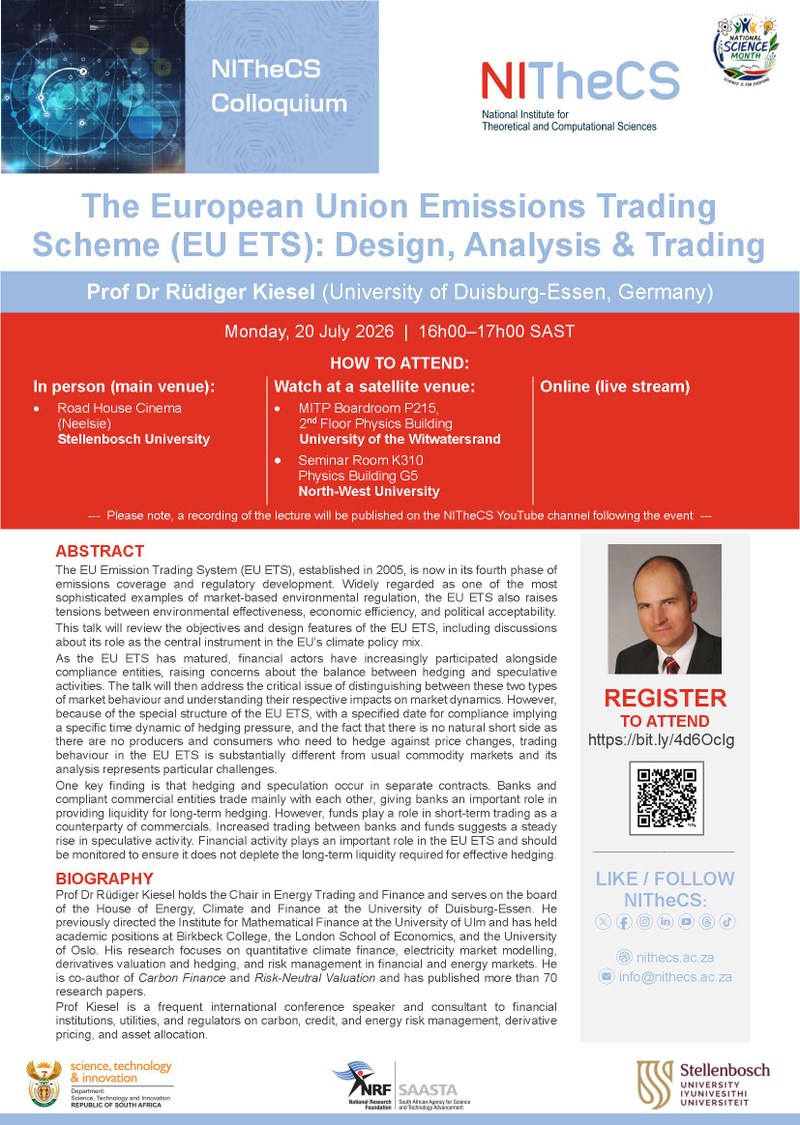
Details
Widely regarded as one of the most sophisticated examples of market-based environmental regulation, the EU ETS also raises tensions between environmental effectiveness, economic efficiency, and political acceptability.
This talk will review the objectives and design features of the EU ETS, including discussions about its role as the central instrument in the EU’s climate policy mix.
As the EU ETS has matured, financial actors have increasingly participated alongside compliance entities, raising concerns about the balance between hedging and speculative activities. The talk will then address the critical issue of distinguishing between these two types of market behaviour and understanding their respective impacts on market dynamics. However, because of the special structure of the EU ETS, with a specified date for compliance implying a specific time dynamic of hedging pressure, and the fact that there is no natural short side as there are no producers and consumers who need to hedge against price changes, trading behaviour in the EU ETS is substantially different from usual commodity markets and its analysis represents particular challenges.
One key finding is that hedging and speculation occur in separate contracts. Banks and compliant commercial entities trade mainly with each other, giving banks an important role in providing liquidity for long-term hedging. However, funds play a role in short-term trading as a counterparty of commercials. Increased trading between banks and funds suggests a steady rise in speculative activity. Financial activity plays an important role in the EU ETS and should be monitored to ensure it does not deplete the long-term liquidity required for effective hedging.
Materials