.svg)
NITheCS Bursary Holders Workshop: Developing Researchers, Sharing Science
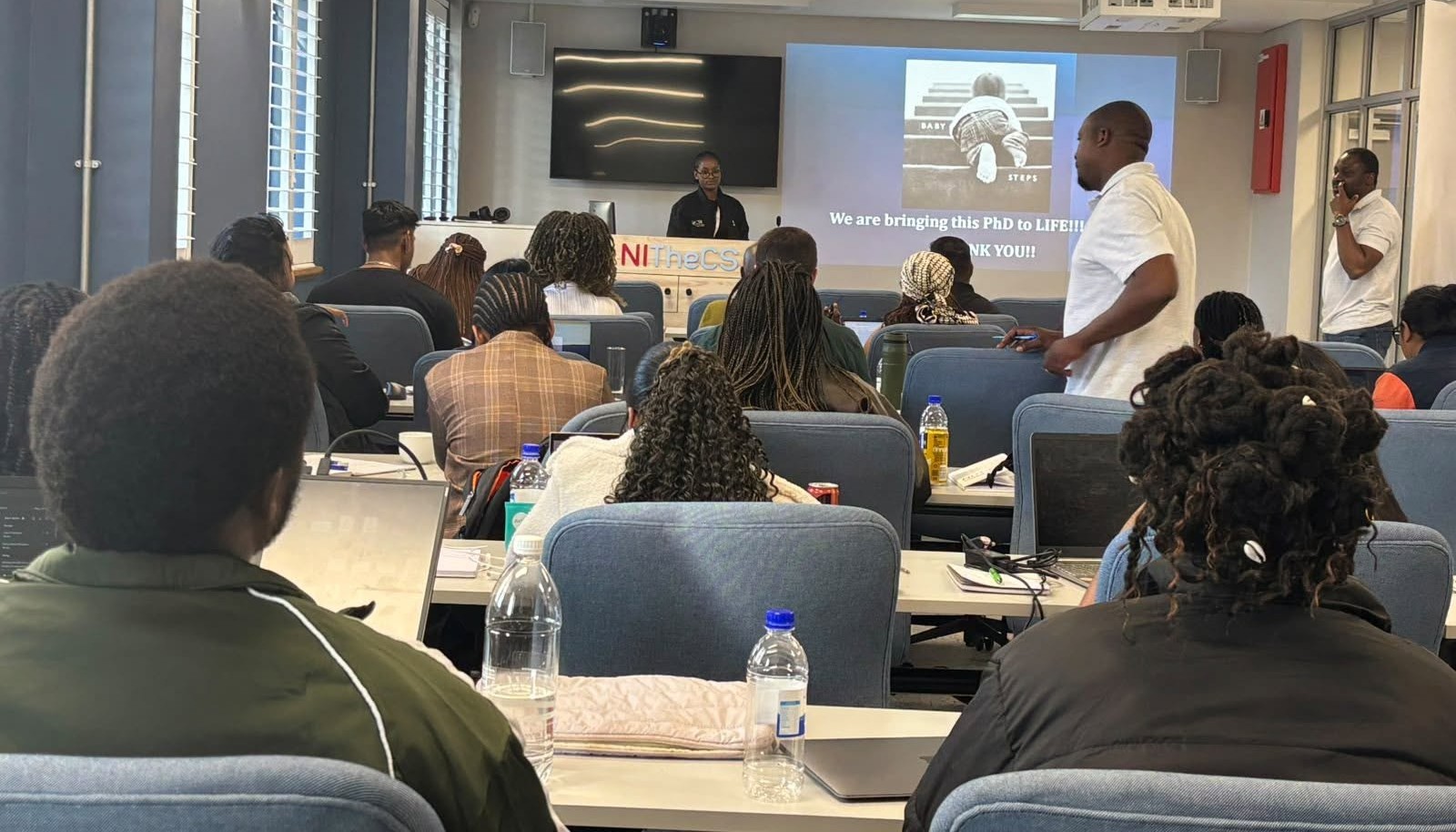
NITheCS hosted its Bursary Holders Workshop from 28–30 September 2026 at the NITheCS Seminar Room, bringing together postgraduate students and postdoctoral researchers from across the institute’s community for three days of learning, research exchange and professional development.
The workshop opened with remarks from NITheCS Director, Prof Francesco Petruccione, before participants took part in a series of masterclasses designed to strengthen their academic and research skills. One of the key sessions focused on Generative AI in Academia, exploring critical digital literacy and practical approaches to academic writing. The programme also included additional masterclass sessions, an NRF presentation, and opportunities for bursary holders to engage directly with experienced academics and researchers.
A major part of the workshop was dedicated to giving bursary holders the opportunity to present their own research. Master’s, PhD and postdoctoral researchers each delivered presentations on their work, providing a platform to communicate their research, receive feedback and learn from peers working across different areas of theoretical and computational science.
The presentations also highlighted the breadth of research being supported through the NITheCS bursary programme. From emerging Master’s researchers to doctoral candidates and postdoctoral researchers, the workshop created a space where participants could not only showcase their work,but also develop confidence in communicating their science to a broader academic audience.
At the conclusion of the workshop, outstanding presentations were recognised across the different research levels. The winners were:
· Postdoctoral Researchers: Dr Dean Brand
· PhD: Saarisha Govender
· MSc: Kiasha Haridas
The Bursary Holders Workshop reflected NITheCS’ continued commitment to supporting the development of the next generation of researchers. By combining masterclasses with opportunities for participants to present their own work, the workshop encouraged both skills development and scientific exchange, while strengthening connections across the NITheCS research community.